
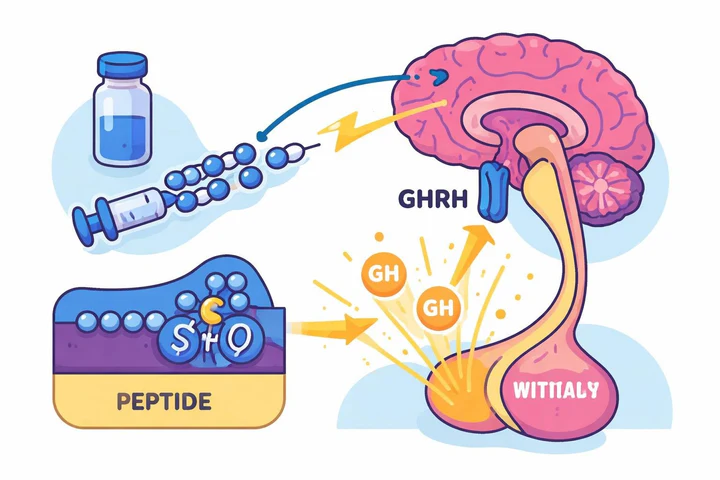
Optimizing growth hormone levels has become a key focus for individuals aiming to improve recovery, body composition, and overall vitality. Among the peptides widely used for this purpose, CJC 1295 without DAC has gained strong attention due to its ability to support natural growth hormone release patterns.
Unlike long-acting alternatives, this peptide allows for more precise control over dosing and timing, making it ideal for users who want to align supplementation with the body’s natural hormonal rhythm. Its shorter activity window provides flexibility while still delivering effective growth hormone stimulation.
Understanding CJC 1295 Without DAC Structure and Function
CJC 1295 without DAC is a modified version of growth hormone-releasing hormone (GHRH), designed to improve stability and effectiveness while closely mimicking the natural hormone. The key difference lies in the absence of the Drug Affinity Complex (DAC), which significantly alters how the peptide behaves in the body.
This peptide contains a chain of 29 amino acids that replicates the function of natural GHRH. It is engineered to resist rapid breakdown while still maintaining a relatively short active duration. Without the DAC component, its half-life typically ranges from 30 minutes to around 2 hours, much shorter than the extended-release version.
Because of this shorter activity window, growth hormone is released in pulses rather than being continuously elevated. This pattern closely mirrors how the body naturally secretes growth hormone, allowing the endocrine system to function more rhythmically.
Mechanism of Action
CJC 1295 without DAC works by interacting with GHRH receptors located on somatotroph cells in the anterior pituitary gland. Once these receptors are activated, a chain of internal cellular processes begins, ultimately leading to the release of growth hormone into circulation.
Key mechanisms include:
- Activation of adenylyl cyclase, increasing cyclic AMP levels
- Mobilization of intracellular calcium stores
- Enhanced gene expression related to growth hormone production
- Strengthening of the body’s natural GHRH signaling pathways
Because of its short half-life, the peptide allows receptor activity to reset between doses. This helps maintain sensitivity and prevents continuous overstimulation, which can occur with longer-acting compounds.

Comparing CJC 1295 With and Without DAC
Understanding the differences between DAC and non-DAC versions is essential when choosing the right protocol. Each formulation offers unique advantages depending on individual goals and lifestyle.
| Feature | CJC 1295 Without DAC | CJC 1295 With DAC |
| Half-Life | 30 minutes to 2 hours | 6–8 days |
| Injection Frequency | 2–3 times daily | 1–2 times weekly |
| GH Release Pattern | Pulsatile (natural) | Continuous elevation |
| Receptor Sensitivity | Maintained | Possible desensitization |
| Flexibility | High dosing control | Less flexible |
The non-DAC version requires more frequent injections, but it provides greater flexibility and allows users to better align dosing with daily routines, workouts, and sleep cycles.
Advantages of the Non-DAC Formulation
Although the shorter half-life may seem less convenient at first, it offers several meaningful benefits. Users can time their doses strategically—such as before workouts or before sleep, to enhance recovery and tissue repair during key physiological windows.
This pulsatile release pattern also reduces the risk of prolonged hormone elevation, which may help minimize side effects like water retention or insulin sensitivity issues. Many users report a more balanced and controlled experience compared to long-acting versions.
For those considering high-quality peptide options, lifestyle and consistency play an important role in determining whether this formulation is the right fit.
Dosing Protocols and Administration Guidelines
Proper dosing is essential for achieving consistent results while avoiding unnecessary side effects. Due to its shorter duration, CJC 1295 without DAC is typically administered multiple times per day to maintain effective stimulation of growth hormone release.
Standard Dosing Framework
Most protocols involve 100–200 mcg per injection, with total daily intake usually ranging between 300–600 mcg, divided across multiple doses.
Common administration approaches include:
- Twice-daily protocol: Morning (fasted) and before bedtime
- Three-times-daily protocol: Morning, post-workout, and before sleep
- Training-focused protocol: Pre-workout and before bed on training days
Subcutaneous injection is the preferred method, allowing the peptide to be absorbed efficiently through fatty tissue beneath the skin. Using proper injection technique ensures consistent delivery and minimizes complications.
Timing plays a major role in effectiveness. Administering doses during fasted states or before sleep aligns with the body’s natural growth hormone peaks, enhancing overall results through a synergistic effect.
Cycling and Duration
Most practitioners suggest using peptides in structured cycles to maintain receptor sensitivity and long-term effectiveness. A common approach involves running a cycle for 8 to 12 weeks, followed by a break of around 4 weeks before starting again.
During the active phase, consistency plays a major role in achieving reliable outcomes. Administering doses at the same time each day helps establish stable growth hormone patterns. Inconsistent timing or skipped doses can interfere with these rhythms and reduce overall effectiveness.

Benefits and Expected Outcomes
Individuals using CJC 1295 without DAC often experience a variety of benefits linked to improved growth hormone activity. Results can differ depending on factors such as age, baseline hormone levels, nutrition, and training habits, but several effects are commonly observed across users.
Body Composition Improvements
Elevated growth hormone levels support noticeable changes in body composition through multiple biological processes. One of the key effects is increased lipolysis, where stored fat is broken down and released as energy. This occurs as growth hormone activates enzymes responsible for mobilizing fatty acids.
At the same time, protein synthesis is enhanced, helping preserve and build lean muscle tissue. This combination creates an ideal environment for fat loss while maintaining or even increasing muscle mass, often referred to as body recomposition.
Commonly reported improvements include:
- Decrease in both visceral and subcutaneous fat
- Maintenance of lean muscle during calorie deficits
- Improved muscle tone and definition
- Higher metabolic rate and calorie utilization
In addition, recovery processes tend to improve. Many individuals report reduced soreness after workouts and quicker recovery between training sessions when growth hormone levels are optimized.
Anti-Aging and Wellness Effects
Growth hormone contributes significantly to cellular repair and regeneration, which can lead to noticeable improvements in overall wellness. These effects often go beyond fitness and extend into daily vitality and long-term health support.
Skin health may improve due to increased collagen production, which can enhance elasticity and reduce the appearance of fine lines. Hair and nail growth may also become stronger and more consistent, reflecting improved protein turnover in the body.
Sleep quality is another area where users frequently notice benefits. Since growth hormone naturally peaks during deep sleep, supporting this cycle may enhance rest, recovery, and overall energy levels.
| Benefit Category | Typical Timeframe | Intensity Level |
| Energy increase | 1–2 weeks | Moderate |
| Fat loss | 3–6 weeks | Moderate to High |
| Muscle growth | 4–8 weeks | Moderate |
| Skin improvements | 6–12 weeks | Mild to Moderate |
| Recovery enhancement | 2–4 weeks | High |
Those looking for broader anti-aging support sometimes explore combining peptides to target multiple pathways involved in cellular health.
Combining with Other Peptides for Enhanced Results
Growth hormone–releasing compounds often work more effectively when paired with complementary peptides. Combining different mechanisms can amplify overall results and produce stronger outcomes compared to using a single compound alone.
Popular Peptide Combinations
One of the most widely used combination pairs is CJC 1295 without DAC with Ipamorelin, a growth hormone–releasing peptide. This duo works through separate biological pathways, resulting in a stronger and more efficient growth hormone response.
While CJC 1295 stimulates GHRH receptors, Ipamorelin activates ghrelin receptors. Together, they create a synergistic effect that enhances growth hormone release beyond what either peptide can achieve independently.
Typical dosing for this combination involves 100–200 mcg of each peptide per administration, often taken at the same time to maximize effectiveness.
Another combination sometimes used involves pairing with Tesamorelin, although this is less common due to similarities in how the compounds function. Some advanced users incorporate it selectively depending on specific goals.
Stacking Considerations
When combining peptides, it’s important to carefully manage total dosage to avoid excessive stimulation. Starting with reduced doses allows users to evaluate tolerance before increasing to full protocol levels.
Important guidelines for stacking include:
- Begin with approximately half of the standard doses when combining compounds
- Monitor side effects closely, especially during initial use
- Keep dosing times consistent across all peptides
- Rotate or cycle combinations periodically to maintain responsiveness
Using multiple peptides increases overall cost, but many users find the enhanced results justify the additional investment. Ensuring high-quality sourcing becomes even more important when running stacked protocols.
Safety Profile and Potential Side Effects
CJC 1295 without DAC is generally well tolerated, but like any peptide, it may cause side effects—especially at higher doses or in sensitive individuals. Understanding potential reactions allows for better management and safer use.
Common Side Effects
Most side effects are mild and temporary, often improving as the body adapts. One of the most common issues is water retention, which may present as slight bloating or temporary weight gain due to fluid shifts.
Injection site reactions can also occur, including redness, swelling, or minor irritation. Rotating injection sites and maintaining proper hygiene can significantly reduce these effects.
Some individuals may experience headaches in the early stages, possibly due to fluid balance changes. These usually resolve over time or with slight dose adjustments.
Other less frequent side effects include:
- Tingling or numbness in hands or feet
- Joint stiffness or mild discomfort
- Increased appetite
- Warm or flushed sensation after injection
- Occasional fatigue or drowsiness
Serious complications are rare when recommended dosing protocols are followed. However, awareness and proper monitoring remain important.
Contraindications and Precautions
Certain individuals should avoid using CJC 1295 without DAC or proceed only under professional supervision. Those with active cancer should not use growth hormone–stimulating peptides, as they may influence cell growth processes.
People with diabetes or insulin resistance should be cautious, as growth hormone can impact glucose regulation. Regular monitoring of blood sugar levels is advised in such cases.
Pregnant or breastfeeding women are also advised to avoid peptide use due to limited safety data and unknown effects on fetal or infant development.
Quality Considerations and Purity Standards
The safety and overall effectiveness of CJC 1295 without DAC are highly dependent on the product’s purity and manufacturing quality. Since peptides are produced through complex biochemical processes, even small variations in production can significantly influence their stability, potency, and reliability.
Analytical Testing and Verification
Trusted suppliers back their products with high-performance liquid chromatography (HPLC) reports to confirm purity levels. High-quality peptides generally reach 98% purity or higher, ensuring minimal presence of impurities such as synthesis residues or degraded fragments.
In addition to HPLC, mass spectrometry is used to verify the peptide’s molecular structure and confirm that the amino acid sequence matches authentic CJC 1295 without DAC. This step ensures that the compound is structurally accurate and suitable for intended use.
Independent, third-party lab testing provides an extra layer of confidence. Certificates of Analysis (COAs) issued by accredited laboratories offer transparent proof of composition, giving users assurance about the product’s quality and consistency.
Storage and Handling Requirements
Maintaining proper storage conditions is essential to preserving peptide integrity over time. In its lyophilized (freeze-dried) form, the peptide can remain stable at room temperature briefly, but refrigeration is recommended for extended storage.
After reconstitution with bacteriostatic water, the solution should be kept at 2–8°C (36–46°F) to maintain effectiveness. Under these conditions, the peptide typically remains stable for several weeks.
Freezing the reconstituted solution should be avoided, as ice formation can damage the peptide’s delicate structure. Additionally, exposure to light can gradually degrade the compound, making storage in amber or opaque vials a better option.
Before purchasing, reviewing a supplier’s COA and storage recommendations can help ensure consistent product performance.
Legal Status and Regulatory Considerations
Peptide regulations differ across regions and continue to evolve, making it important to understand the legal framework before purchasing or using such compounds.
The legal classification of peptides often depends on both location and intended use. In the United States, CJC 1295 without DAC is not approved by the FDA for human consumption but is permitted for research purposes.
Compounding pharmacies may provide peptides under certain conditions, particularly when prescribed by healthcare professionals for specific needs. However, regulatory guidance in this area is still developing and may vary.
Athletes participating in regulated competitions should exercise caution, as growth hormone–releasing compounds are typically listed as prohibited substances. Organizations like the World Anti-Doping Agency (WADA) classify GHRH analogs as performance-enhancing and restrict their use.
International purchases introduce additional considerations, including customs regulations and import restrictions. It is always advisable to review local laws before ordering peptides from overseas suppliers.

Optimizing Results Through Lifestyle Integration
The impact of CJC 1295 without DAC extends beyond the peptide itself. Lifestyle factors such as nutrition, training, sleep, and recovery play a major role in determining overall outcomes.
Nutritional Considerations
Growth hormone influences how the body utilizes nutrients, making diet a key component of any protocol. Adequate protein intake is especially important, as increased protein synthesis requires a consistent supply of amino acids. Many experts suggest consuming 1.0 to 1.5 grams of protein per pound of lean body mass daily.
Carbohydrate intake also plays a role, as insulin can counteract some effects of growth hormone. Some individuals prefer lower-carb approaches to enhance fat metabolism, while others strategically time carbohydrates around workouts to support performance and recovery.
Micronutrients are equally important. Nutrients such as zinc, magnesium, and vitamin D support hormone production and receptor sensitivity, helping optimize overall results.
Training and Recovery Protocols
Resistance training remains one of the most effective ways to maximize the benefits of increased growth hormone levels. Following progressive overload principles ensures continuous adaptation, while the peptide enhances recovery and muscle-building processes.
Sleep quality is another critical factor. Growth hormone is naturally released during deep sleep, and taking CJC 1295 without DAC before bedtime may enhance this natural cycle. Consistently getting 7–9 hours of sleep supports recovery, hormonal balance, and performance.
Managing stress is equally important, as elevated cortisol levels can interfere with growth hormone activity. Practices such as proper rest, recovery days, and stress-reduction techniques help maintain a favorable hormonal environment.
Supporting growth hormone levels with CJC 1295 without DAC can be highly effective when combined with proper dosing, high-quality sourcing, and a well-structured lifestyle approach. Paying attention to purity standards, regulatory considerations, and daily habits ensures better consistency, improved outcomes, and a safer overall experience.